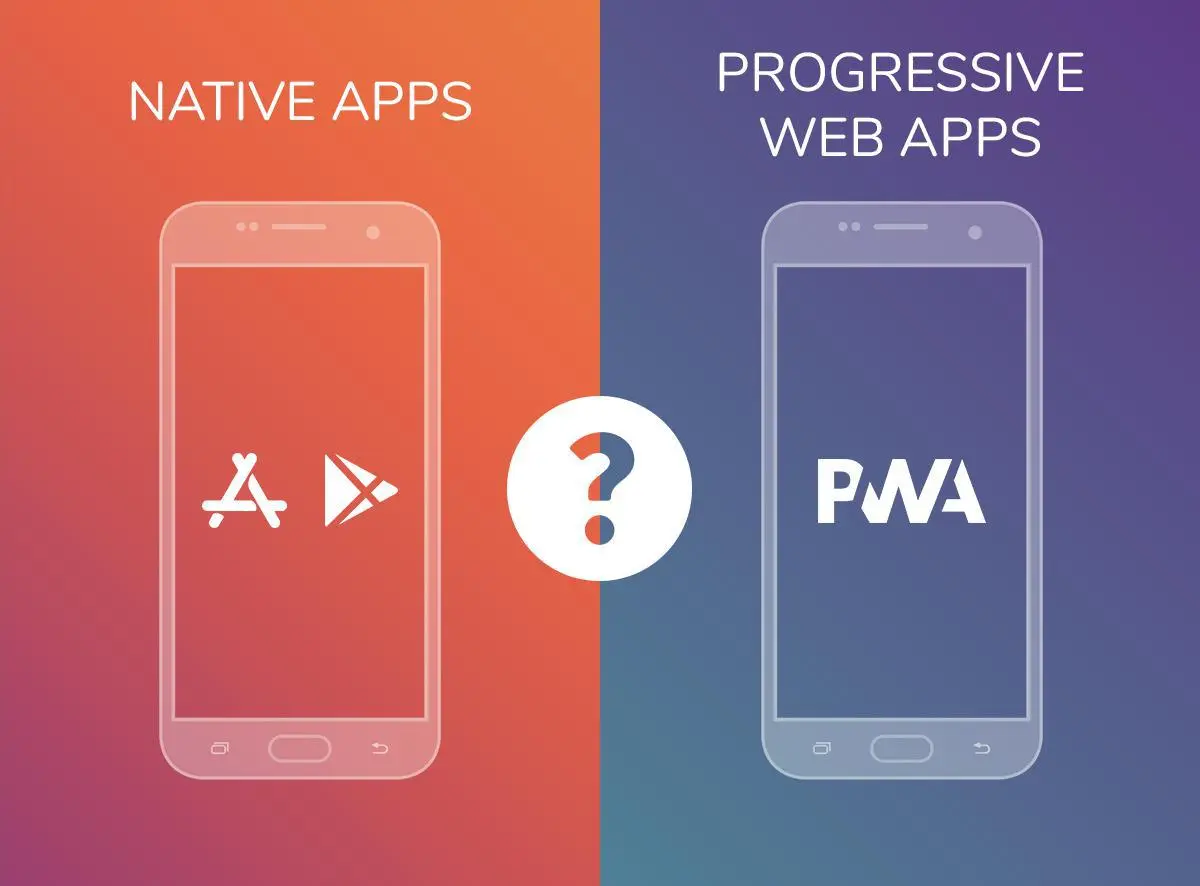
When it's time to go mobile, businesses face a critical decision: build a native mobile app, or create a Progressive Web App (PWA)? Both approaches have their merits, and the right choice depends on your specific needs, budget, and goals.
What's the Difference?
Native Mobile Apps
Native apps are built specifically for iOS (Swift/Objective-C) or Android (Kotlin/Java). They're downloaded from app stores and installed directly on the device.
Progressive Web Apps (PWAs)
PWAs are web applications that use modern web technologies to deliver app-like experiences. They run in the browser but can be "installed" on the home screen and work offline.
Head-to-Head Comparison
| Feature | Native App | PWA |
|---|---|---|
| Development Cost | $50K - $500K+ | $10K - $100K |
| Time to Market | 3-12 months | 1-4 months |
| Device Access | Full hardware access | Limited (growing) |
| Performance | Optimal | Very Good |
| Updates | Requires app store approval | Instant |
| Discovery | App Store presence | Search engines + sharing |
| Offline Support | Full | Good (service workers) |
| Push Notifications | Full support | Limited on iOS |
When to Choose a Native App
Heavy Device Features
Need Bluetooth, NFC, ARKit, or advanced camera controls? Go native.
Performance Critical
Games, video editing, or real-time applications benefit from native speed.
App Store Presence
Need discoverability through app stores or have compliance requirements.
Complex Offline Needs
Extensive offline functionality with large local databases.
When to Choose a PWA
Budget Constraints
One codebase for all platforms means significant cost savings.
Quick Launch
Need to go to market fast? PWAs have shorter development cycles.
Content-Focused
News, e-commerce, or informational apps are perfect for PWAs.
Wide Reach
No app store friction means easier user acquisition and onboarding.
Real-World Success Stories
PWA Wins
- Twitter Lite: 75% increase in tweets sent, 65% decrease in data usage
- Starbucks: PWA is 99.84% smaller than iOS app, doubled daily active users
- Pinterest: 40% increase in time spent, 44% increase in ad revenue
Native App Wins
- Instagram: Heavy use of camera, AR filters, and video editing
- Uber: GPS, payments, and real-time communication
- Mobile Games: Performance-critical applications need native power
The Hybrid Approach
Many successful companies use both: a PWA for broad reach and user acquisition, and native apps for power users who need the full feature set.
Start with a PWA to validate your concept and user base. Then invest in native apps if and when you hit limitations that only native can solve.
Decision Framework
Choose PWA if:
Budget is tight, speed to market matters, your app is content-focused, or you need web discoverability.
Choose Native if:
You need full hardware access, performance is critical, you require app store presence, or you have complex offline requirements.
Choose Both if:
You have the budget and different user segments with different needs.
Not Sure Which Path Is Right for You?
We build both PWAs and native apps. Let us help you choose the right approach for your specific business needs and goals.
Schedule a Consultation →