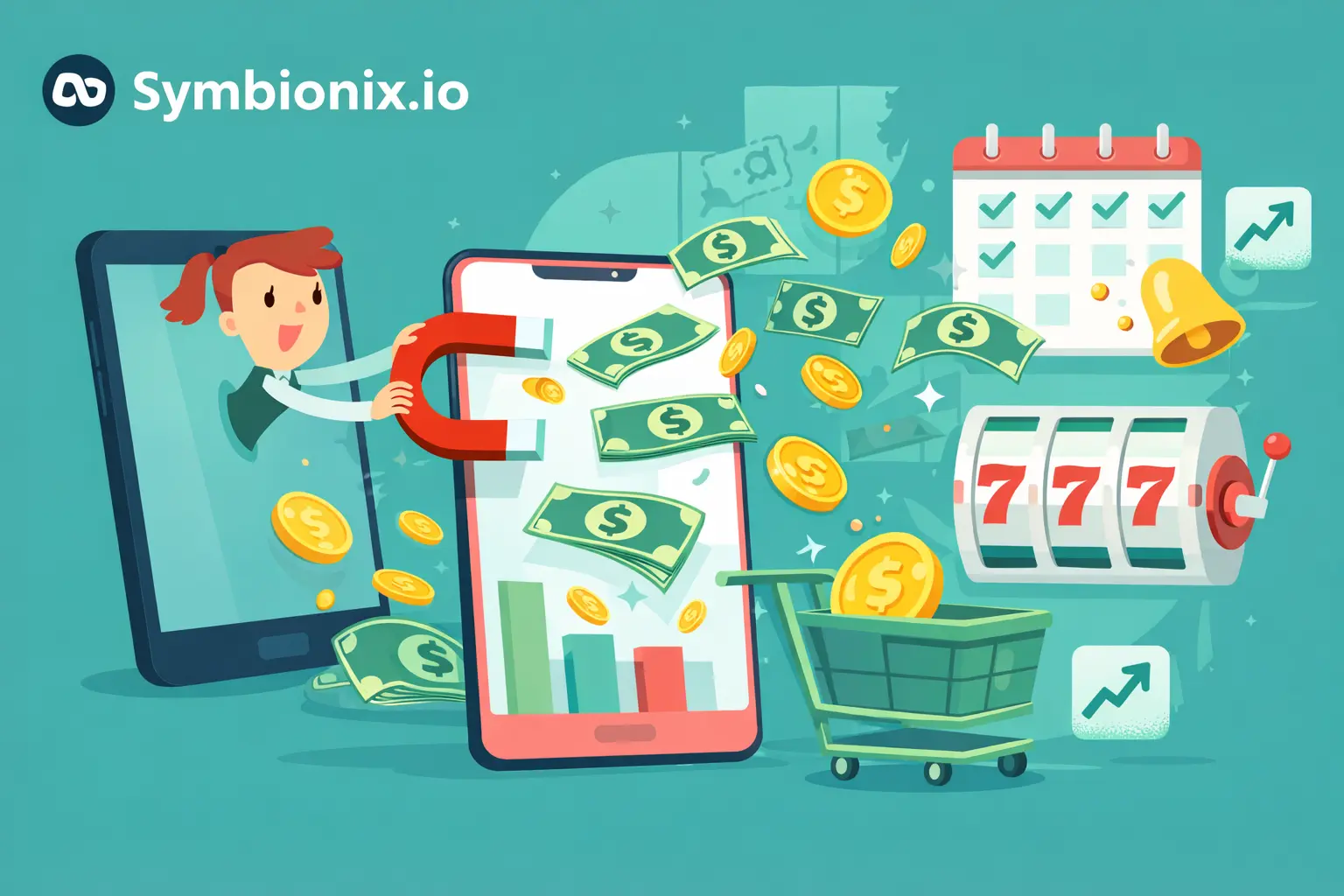
Every small business owner eventually asks the same question: is it worth building an app? Your website brings traffic, but a mobile app keeps customers. The numbers show that app users buy more often, spend more per purchase, and cost less to retain. Here's why building an app for your business is the highest-ROI investment most companies aren't making — and the real data to prove it.
Here's a pattern we see repeatedly: a small business has a solid website, decent traffic, maybe even good SEO. But conversion rates plateau, customer acquisition costs keep climbing, and customer loyalty is a constant battle. The missing piece? A custom mobile app.
Not a template app from a drag-and-drop builder. Not a glorified bookmark of your website. A custom app built specifically for your business — one that eliminates friction, creates a direct communication channel with your customers, and turns one-time buyers into loyal repeat customers.
This isn't about following trends. It's about the numbers — and they make a compelling case for why you should build an app for your business. The benefits of a mobile app go far beyond "having a presence on the App Store." We're talking about measurable ways to increase revenue, reduce costs, and build customer retention that compounds over time.
01 — App vs. Website: The Conversion Gap
The app vs website debate comes down to one metric: conversion. Mobile apps convert at 6.14% — that's 3× higher than mobile websites at 1.57%, and nearly double desktop at 3.06%. This isn't a marginal improvement. It's a different category of performance entirely.
Why the gap? It comes down to friction. On a website, every purchase requires entering addresses, payment details, and navigating a checkout flow designed for desktop. A custom app eliminates all of that — Face ID login, saved cards, Apple Pay / Google Pay, one-tap reordering. Customers who've been through checkout once never have to think about it again.
Real example: Naked Harvest, a wellness brand, saw a 142% increase in conversion rate on their app compared to mobile web. HOP WTR, a beverage brand built around repeat purchases, saw 139% higher conversion. These aren't tech companies with engineering teams of 50 — they're mid-size brands that decided friction was costing them money.
02 — How Apps Increase Revenue: Bigger Tickets, More Purchases
App users don't just convert more. They spend more per transaction and come back more often. This is where the benefits of a mobile app really compound — and where most business owners underestimate the impact.
App users spend on average $95 per transaction versus $73 on mobile web — a 10-30% increase depending on industry. They visit 2× per month instead of once. And they spend 201 minutes per month in shopping apps versus just 10.9 minutes on mobile websites. That's not a rounding error — that's 18× more time with your brand.
The reason is behavioral. When someone downloads your business app, they've made a commitment. Your icon is on their home screen next to Instagram and WhatsApp. You're no longer competing for a browser tab — you have dedicated real estate on their most personal device. And with personalized recommendations, saved preferences, and loyalty features, each visit becomes stickier than the last.
The revenue concentration effect:
In real ecommerce brand data, app users consistently punch above their weight. One wellness brand saw just 16% of customers using the app — but those users generated 62% of total revenue. A fashion brand had only 7% of traffic from app users, yet they drove 20% of all revenue. The math is undeniable.
03 — Lower Acquisition Costs, Stronger Customer Loyalty
Customer acquisition cost (CAC) is the silent killer of growing businesses. You spend more on ads every quarter just to maintain the same growth. A mobile app for your business fundamentally changes this equation — helping you reduce costs while building the kind of customer loyalty that paid ads can never buy.
The numbers tell a clear story. While 25.25% of website traffic comes from paid ads, only 7.16% of app traffic does — an 18-point difference. App users come back organically because the app is always there, one tap away. According to Forrester, the customer acquisition cost for mobile apps is approximately 20% lower than for mobile websites, because apps foster loyalty and repeat behavior that reduces ongoing marketing spend.
And retention? App users demonstrate a 58% 90-day retention rate on average. Add personalized push notifications and in-app engagement, and that jumps to 79%. Compare that to the typical website visitor, where you're lucky to see 20% return within 90 days without paid retargeting.
04 — Push Notifications: Your Free Revenue Channel
This is the most underrated advantage of having your own business app. Push notifications give you a direct, instant communication channel with your customers — no algorithm, no ad spend, no inbox competition.
Consider this: 70% of shopping carts are abandoned. On mobile, it's up to 85%. Every abandoned cart is revenue sitting on the table. Push notifications recover 8-12% of those carts — versus 5-8% for email. They're instant, they're visible, and they don't get buried in a spam folder.
Real data from ecommerce brands: one cannabis retailer recovered over $360,000 in a single month through abandoned cart push notifications alone. A wellness brand generates $14K+ monthly from automated cart recovery. A fashion brand recovers $5,700 monthly. All automated. Zero ad spend. Zero manual effort.
But abandoned carts are just the beginning. Flash sales, back-in-stock alerts, loyalty rewards, personalized recommendations — push notifications turn your custom app into a 24/7 sales engine that works while you sleep.
The Starbucks effect:
Starbucks processes over 24% of all US transactions through their mobile app. Not their website. Not in-store alone. Their app. That's what happens when you give customers a frictionless way to order, pay, and earn rewards — all in one place.
05 — How Apps Reduce Costs and Streamline Operations
A custom business app doesn't just generate revenue — it helps you reduce operational costs. Every manual process you automate through your app is labor saved, errors reduced, and friction removed. For small businesses especially, these savings can be transformative.
- Self-service bookings & scheduling — Clients book, reschedule, and cancel without calling. For service businesses, this alone can replace a part-time admin role.
- Automated order management — Push orders directly from app to fulfillment. No manual entry, no copy-paste errors, no phone calls to confirm.
- In-app customer support — Combine AI chatbot + FAQ + human escalation in one interface. Customers solve 80% of issues without contacting your team.
- Digital loyalty programs — Replace punch cards and manual tracking with automated rewards. Increases repeat visits while eliminating admin overhead.
- Invoicing & payments — In-app payments with saved methods, auto-generated invoices, subscription billing. Reduces accounts receivable delays and payment friction.
- Real-time analytics — See what products are trending, which customers are churning, where users drop off — without waiting for monthly reports.
Companies that invest in custom business applications typically see ROI within 18-24 months, with targeted automation reducing operational costs by 30-40% in the workflows the app handles. The initial investment pays for itself not through revenue alone, but through the compound effect of lower costs, fewer errors, and faster operations.
06 — App vs. Website: Side-by-Side
| Metric | Mobile App | Mobile Website |
|---|---|---|
| Conversion rate | 6.14% | 1.57% |
| Average order value | $95 | $73 |
| Customer lifetime value | 2.8× higher | Baseline |
| Time spent per month | 201 minutes | 10.9 minutes |
| 90-day retention | 58-79% | ~20% |
| Paid ad dependency | 7.16% of traffic | 25.25% of traffic |
| Acquisition cost | ~20% lower | Baseline |
| Push notifications | Yes — direct, instant | Limited (web push only) |
| Offline capability | Yes | No |
| Personalization depth | Full (device data, behavior, location) | Partial (cookies, sessions) |
This doesn't mean you should ditch your website. Your site is your storefront — it's how new customers find you through search and social. But your app is your retention engine. The website acquires. The app retains, upsells, and compounds. The businesses that understand this are the ones seeing 40-60% of online revenue come through their app channel.
07 — Does Your Business Actually Need an App?
Not every business needs an app. A local bakery with 50 customers doesn't. But if you're a small business and any of these apply to you, the ROI case is strong:
- You have repeat purchase behavior — Food & beverage, fitness, subscriptions, beauty, fashion. Anywhere customers reorder, an app makes reordering frictionless.
- You rely on bookings or appointments — Gyms, clinics, salons, consultants. Self-service scheduling through an app eliminates back-and-forth and no-shows.
- You're spending heavily on paid ads — If your CAC is climbing, an app shifts customers from ad-dependent to organic return behavior.
- You have a loyalty or membership component — Apps are the natural home for loyalty programs, tier systems, and exclusive content.
- Your customers are mobile-first — If 60%+ of your traffic is mobile, you're losing conversion to friction that an app eliminates.
- You compete on experience, not just price — An app lets you build an experience around your brand that a website simply can't match.
- Custom apps used to cost $50K-$250K. With AI-assisted development and modern cross-platform frameworks like React Native, a production-ready app can now be built for a fraction of that — often starting at $5K-$20K depending on complexity.
- You need to drive app adoption. An app nobody downloads is a wasted investment. Plan your download-to-use pipeline before building.
- Maintenance is ongoing. Bug fixes, OS updates, new features — budget 15-20% of build cost annually for upkeep.
- App Store approval isn't guaranteed. Both Apple and Google have review processes and policies that your app must comply with.
Frequently Asked Questions
If your business relies on repeat purchases, bookings, or customer loyalty, the answer is almost always yes. The data shows that even with a small user base, app users generate disproportionate revenue — in some cases, 16% of app users driving 62% of total revenue. The key question is whether your customers would use an app regularly, not just download it once.
Traditional custom app development used to cost $50K-$250K. With AI-assisted development and cross-platform frameworks like React Native, production-ready apps now start at $5K-$20K depending on complexity. Ongoing maintenance typically runs 15-20% of the build cost annually. The ROI timeline has shortened dramatically — many businesses see returns within 6-12 months.
Yes, they serve different purposes. Your website is your storefront — it's how new customers find you through search engines and social media. Your app is your retention engine — it's where existing customers come back, reorder, and build loyalty. The website acquires. The app retains and compounds. The best-performing businesses use both strategically.
The quantifiable benefits include: 3× higher conversion rates vs mobile websites, 10-30% higher average order values, 2× more frequent purchases, 20% lower customer acquisition costs, 58-79% customer retention at 90 days, and the ability to recover abandoned carts through push notifications (which alone can generate $10K+ monthly in recovered revenue).
With modern frameworks and AI-assisted development, a well-scoped MVP (minimum viable product) can be built in 6-10 weeks. A full-featured app typically takes 3-5 months. The key is starting with the features that deliver the most immediate business value — usually checkout, push notifications, and loyalty — then iterating based on real user data.
Typically, 2-5% of your customer base will download your app, with higher rates in industries with frequent repeat purchases (food, beauty, fitness, fashion). The critical insight is that this small percentage of users typically drives 15-30% of total revenue. The strategy is to target your best customers — not try to get everyone on the app — and incentivize downloads with exclusive offers, faster checkout, or loyalty rewards.
Let's Build Your App
At Symbionix, we design and develop custom apps that drive real business results — not template installs. From strategy to App Store launch.
Start Your App Project →